


Blue Flag and Family Friendly: The Best Beaches in Antalya, Muğla and İzmir
Antalya: Where the Mountains Meet the Mediterranean
You could spend an entire summer in Antalya and not run out of coastline to explore. The region stretches from the long sandy arcs of Lara in the east to the wild, boat-access coves of the Lycian coast in the west, and in between it contains more Blue Flag beaches than most European countries manage in total. What makes Antalya distinctive isn’t just the volume — it’s the variety.
On the same day you can swim off a well-equipped family beach in the morning, eat grilled sea bass at a harbor restaurant at lunchtime, and reach a completely empty cove accessible only by sea in the afternoon.
Lara Beach and Konyaaltı are the two beaches that anchor the city itself.
is the resort strip: long, sandy, sociable, and backed by the kind of large hotels that make family logistics easy. Konyaaltı is something else — a pebbly promenade bay where local families swim for free with the Taurus mountains rising behind them. It has the feel of a neighborhood rather than a destination, and that’s what makes it so good. Further west, the beaches around Kemer and Beldibi are sheltered and calm, excellent for younger children, with the mountains so close behind the shoreline that the whole setting feels slightly unreal. And then there’s Kaputş, near Kaş: a turquoise cove at the foot of limestone cliffs that requires descending a staircase cut into the rock face. It’s one of the most photographed beaches in Türkiye, and it still manages to surprise people when they actually see it.
Patara deserves its own mention.
At 18 kilometers, it’s the longest beach in Türkiye, backed by sand dunes and partially protected as a nesting ground for loggerhead sea turtles.
There are no sun loungers for rent, no beach clubs, and no development behind the dunes — just a vast, undisturbed stretch of sand that has looked essentially the same for thousands of years. Nearby ancient ruins and the fact that you can walk for an hour without reaching the end make it feel like a different category of beach altogether. For more on the surrounding area, our guide to the best places in Kaş covers the full western end of the Antalya coast.
Planning note: if you want to cover both Antalya city and the western Lycian coast in a single trip, base yourself in the city for two nights and rent a car for the rest.
The drive west along the D400 coastal road is one of the most beautiful in Türkiye.
Muğla: The Cove Capital of the Aegean
If Antalya is the region that makes you understand why Türkiye has so many Blue Flag beaches, Muğla is the one that makes you understand why people come back every year.This is a province of extraordinary geographical drama: mountains dropping into the sea at angles that create hundreds of sheltered coves, the water turning colors that seem digitally enhanced but aren’t, and a string of towns — Bodrum, Marmaris, Fethiye, Datca, Gocek — that each have their own distinct character and their own coastline to explore. Ölüdeniz is the beach that tends to appear first on any list of the most beautiful in the world, and the photographs don’t exaggerate.
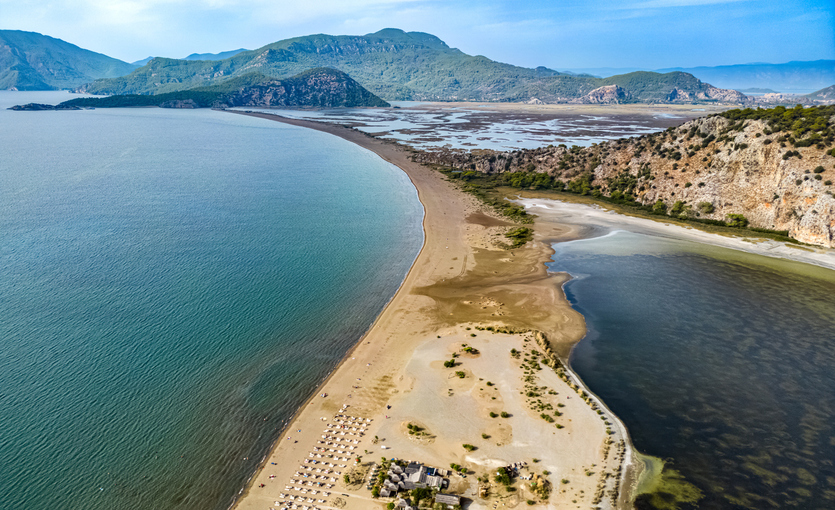
Blue Lagoon is a shallow turquoise inlet separated from the open sea by a narrow sandbank, and the mountains behind it rise so steeply that paragliders launch from the peak of Baba Dağ and glide down to the beach in the time it takes to finish a coffee. It’s genuinely extraordinary, and the Blue Flag designation means the water quality matches the visual impact. Slightly further south, Iztuzu Beach near Dalyan is one of the rare protected beaches in Türkiye: a long dune-backed strip where loggerhead turtles nest between May and October. Access is managed during nesting season, which means the beach stays in the kind of condition that makes it worth protecting in the first place.
Bodrum’s beaches range from the windsurfing flats of Bitez to the boutique coves around Gümbet and the more secluded bays on the peninsula’s north coast.
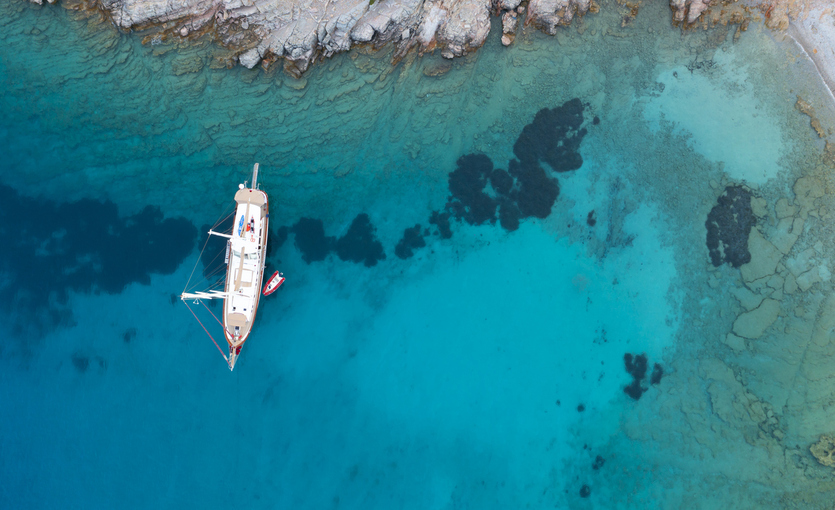
The water around Bodrum is consistently clear, and the peninsula has a sailing culture that means many of the best spots are reached by boat rather than road — which keeps them in excellent condition. Marmaris, meanwhile, combines a long sandy bay with a marina and old town in a way that makes it genuinely easy to split a day between the beach and the rest of the town.
İzmir: Aegean Sophistication and Some of Türkiye’s Best Windsurfing
 The İzmir coastline tends to be the one that surprises people most, partly because the city itself is so good that visitors often spend too much time there and not enough time exploring the peninsulas that extend west into the Aegean. That’s a mistake worth correcting.
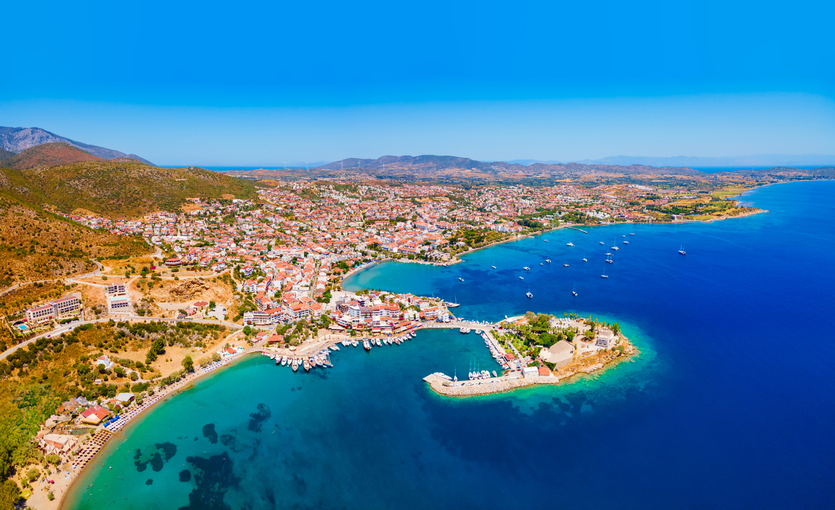
 The stretch from Çeşme in the north to the Karaburun Peninsula in the south is some of the finest coastline in Türkiye: clean Aegean water, long beaches, historic towns, and a cosmopolitan energy that makes the food and nightlife scene considerably more interesting than a purely resort destination.
Çeşme is the town that İzmir residents go to when they want a beach weekend, and it has been drawing visitors long enough to do it with real style.
The beaches around Ilica are sandy and calm, and the thermal springs that warm the shallows give the water a softness that makes it unusually pleasant for swimming even early in the season.
Alaçatı, a short drive south, is a different proposition: a beautifully preserved stone village that has become the windsurfing capital of Türkiye, where the constant Aegean wind and shallow flat water create conditions that attract serious surfers from across Europe. The combination of a genuinely beautiful town, excellent beaches, and world-class water sports in the same place is unusual enough to be worth making a trip for. Further north, Foça is one of those coastal towns that feels like it’s been kept a secret even though it’s been here for millennia — one of the oldest settlements in the Aegean, it now has a small but loyal following of visitors who appreciate the pebble coves, the monk seals that occasionally appear in the harbour, and the absence of the infrastructure that makes more famous beaches easier but less interesting. The İzmir region also contains some of the most important ancient sites in Türkiye, and the combination of Ephesus, Pergamon, and the Aegean coast makes it one of the most rewarding areas in the country for visitors who want their history and their beach in the same trip.
What Blue Flag Actually Means (and Why It Matters)
 The Blue Flag is an international environmental award managed by the Foundation for Environmental Education, and it’s awarded annually to beaches that meet strict standards across four categories:
 water quality, environmental education and information, environmental management, and safety and services. In practical terms, it means the water has been tested and meets European bathing water standards, the beach is clean and well-maintained, there are trained lifeguards during peak season, and first aid is available. For families in particular, it’s the single most reliable indicator that a beach is genuinely safe to swim from and well-looked-after.
Türkiye’s Blue Flag count has grown significantly over the past two decades and now exceeds 500, making it one of the highest totals in the world.
The concentration along the Antalya, Muğla, and İzmir coastlines means that almost any beach you choose in these regions has been through the certification process. The flag itself — dark blue with a white wave motif — flies at the entrance to certified beaches throughout the season. If you don’t see it flying, it’s worth asking why.
Tip: Blue Flag status is re-evaluated every year, so it’s worth checking the current year’s list on the Foundation for Environmental Education website before you travel, particularly for smaller beaches that may gain or lose certification.


Behind the scenes of creative processes
We believe that branding is more than just a logo—it’s about crafting a unique identity that resonates with your audience and drives business success. Our strategic and creative approach ensures that every brand we build is impactful, memorable, and results-driven.
Top 5 Web Design Mistakes That Hurt Conversions.
We believe that branding is more than just a logo—it’s about crafting a unique identity that resonates with your audience and drives business success. Our strategic and creative approach ensures that every brand we build is impactful, memorable, and results-driven.